Why the End of Daylight Saving Time Puts Michigan Drivers at Risk
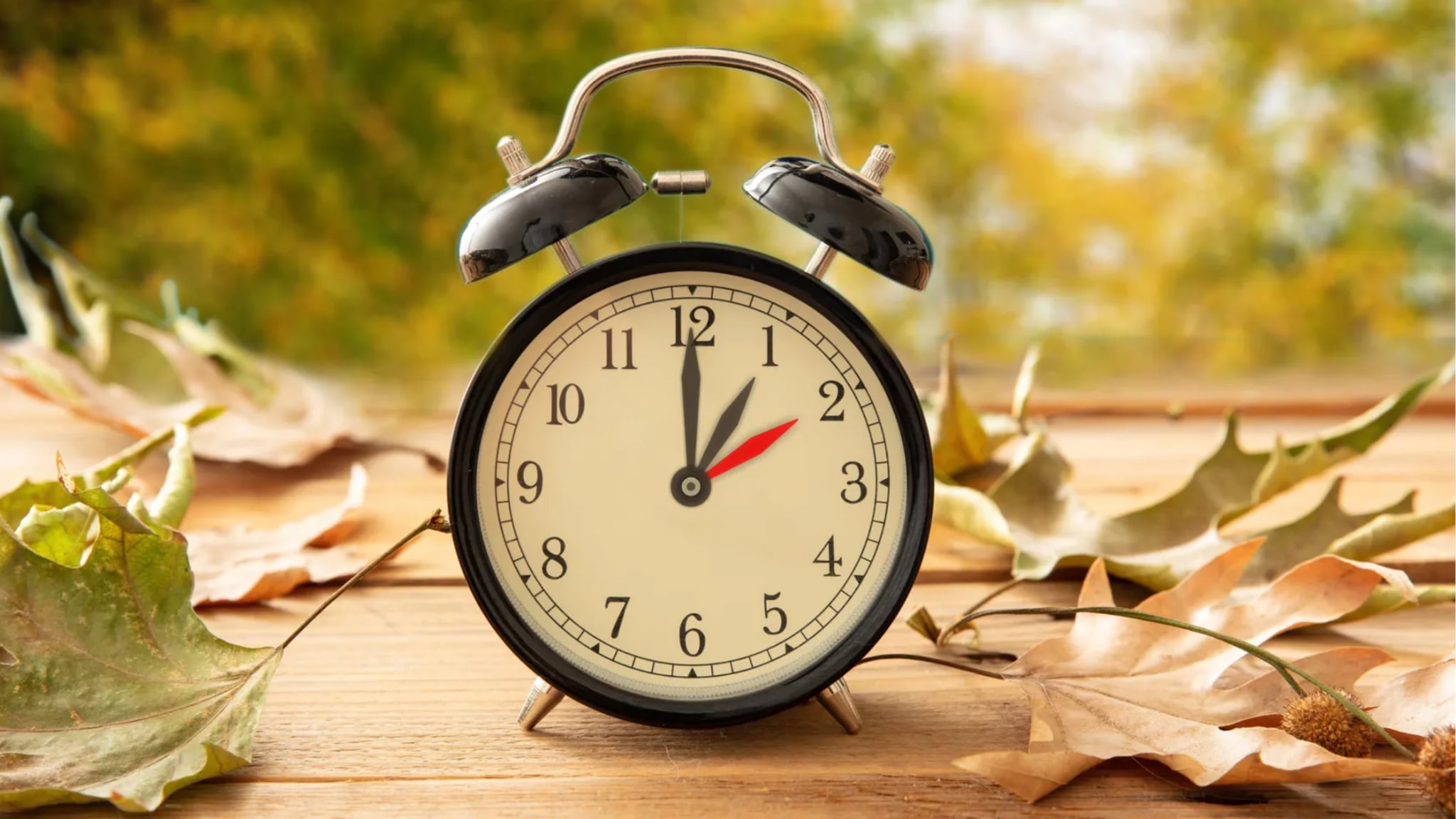
Over the years we’ve written about the dangers posed to Michigan drivers by the annual change to Daylight Saving Time in the summer months and then back to Standard Time for the rest of the calendar year. At 2 a.m. on November 2nd, we’ll once again “fall back” and gleefully gain an hour of sleep as we collectively set our clocks back to 1 a.m.
While that might seem like good news, there’s ample evidence that many drivers are negatively affected by the difference in morning and evening sunlight, not to mention the changing sleep patterns that occur when our biorhythms are jiggered around in the spring and fall as we alternately lose and gain that precious hour of shut-eye.
Let’s take a few moments to discuss the reasons behind having Daylight Saving Time, recent trends where politicians and various states have taken aim at the time-changing tradition, some of the dangers faced by drivers and pedestrians which are likely caused by the annual change in daylight hours, and what you can do if you become the victim of a careless, drowsy driver any time of year.
The storied history of Daylight Saving Time
Turning the country’s clocks back in the fall and moving them forward for the spring and summer months is not a new idea. But the longstanding legend that Daylight Saving Time was first proposed by Benjamin Franklin is apparently far from true. Philadelphia’s Franklin Institute attempts to set things straight by explaining that his advice to the people of Paris, France, to adjust their usual sleep schedules (in other words, to reset their clocks) as a way to economize on the use of candles and other sources of artificial light when there was a perfectly good sun that rose every morning was intended to be somewhat satirical or maybe even sarcastic!
Actually, Daylight Saving Time has several different origin stories, each of which offers its own unique grain of truth. The potential to boost traveling and tourism in the summer months, for example, still encourages some politicians and pro-tourism groups to support changing the time every summer, presumably to give partiers an extra hour of darkness to “sleep it off” along with an added evening hour to resume their celebratory libations. There were also more pragmatic reasons for enacting Daylight Saving Time. At one time, according to the U.S. Department of Transportation, the United States had more than 140 different time zones, which could definitely be confusing for nearly everyone no matter where they lived! Also, contrary to a common misconception that farmers favored Daylight Saving Time, they were one of the groups most opposed to it since it forced them to perform their early morning tasks (think milking their cows and churning their butter) in pitch darkness. Actually, the main reason Daylight Saving Time was initially adopted – despite agricultural objections – was a World War I-era effort to help save energy by making it unnecessary for urban dwellers to turn on their electric lights in the early evening hours.
Regardless of which historical rationale for Daylight Saving Time you choose to accept, the practice was enacted nationally in 1966 with congressional approval of the Uniform Time Act, a law that attempted to standardize time times (hence imposing DST) across the country. Of course, as you might expect, there were some rabidly independent resisters, most famously Arizona and Hawaii, which retained their former timekeeping practices as described in this scholarly and informative article courtesy of Union College, which outlines the history of – and describes some of the ongoing debate surrounding – our nation’s somewhat frequent time changes.
Some states have enacted “trigger laws”
designed to kill DST if other states agree to do so
Some advocates prefer earlier daylight hours since that arrangement permits children to walk to their schools more safely in the morning. Other constituencies prefer sunset hours to remain later so after-school athletic events can be conducted in daylight. Many state legislatures have artfully dodged the issue, enacting laws by which they will automatically adopt whatever time solution their sister states choose. For instance, the Washington, DC-based, political news source The Hill reports that Delaware and Colorado have tied their time-zone choices to decisions which might be made by neighboring states in the future. Michigan has so far remained undecided about making either Standard Time or Daylight Saving Time permanent, as this article from WZZM TV explains. And, once again, federal legislation proposing permanent Daylight Saving Time has stalled in the Senate.
Switching the clock raises the potential
of car-deer accidents and pedestrian injuries
and might also be bad for our overall health
As we’ve already mentioned, there are certainly risks associated with changing our clocks every year, one of which is a measurable increase in the number of accidents involving cars and deer in the fall. The change to earlier hours of darkness in November coincides with deer mating season, which means drivers, bucks and does run a greater risk of running into each other unintentionally at this time of year, and we might be making it worse by having the clocks “fall back” by an hour.
And, of course, children walking home from school in late afternoon darkness are also more difficult to see, which can result in tragic consequences. Indeed, studies have shown a correlation between higher numbers of pedestrian fatalities than occur at other times of year right after we have returned to standard time in the fall which causes it to become dark earlier than we’ve become used to all summer.
Even the National Institute of Health has something to say about our mandatory annual time changes, noting that “drowsiness, poor coordination, and difficulty with learning and focus may occur when circadian rhythms fall out of sync short term.” Furthermore, a study by Stanford University published in September mentions that such medical conditions as stroke, obesity, and heart attacks are all negatively affected when we’re forced to change our biorhythms due to mandatory annual time changes.
Finally, it’s been proven by numerous studies that drivers can become drowsy and more prone to accidents in the days and weeks after our clocks are moved forward and backwards. That’s right – dangers on the roads increase both in the spring and again in the fall when nighttime crashes rise by an average of 28 percent! Makes you wonder if an extra hour of daylight is worth the risk, doesn’t it?
If a drowsy driver ruins your day, we’re here to help
Needless to say, as Michigan’s largest personal injury law firm we deal with a lot of incidents where innocent people are hurt by irresponsible drowsy drivers or in other situations where they simply aren’t to blame for the injuries they’ve suffered. If something bad happens to you through no fault of your own, pick up the phone right away and call 855-MIKE-WINS (855-645-3946) for immediate assistance. We’re here day and night – even at 2 a.m. on November 2nd when everyone else is gaining an extra hour of sleep. You can depend on it!
Content checked by Mike Morse, personal injury attorney with Mike Morse Injury Law Firm. Mike Morse is the founder of Mike Morse Law Firm, the largest personal injury law firm in Michigan. Since being founded in 1995, Mike Morse Law Firm has grown to over 250 employees, served 100,000 clients, and collected more than $2 billion for victims of auto, truck and motorcycle accidents. The main office is in Southfield, MI but you can also find us in Detroit, Sterling Heights and many other locations.