Why the Unique Physics of Motorcycle Accidents Is So Deadly
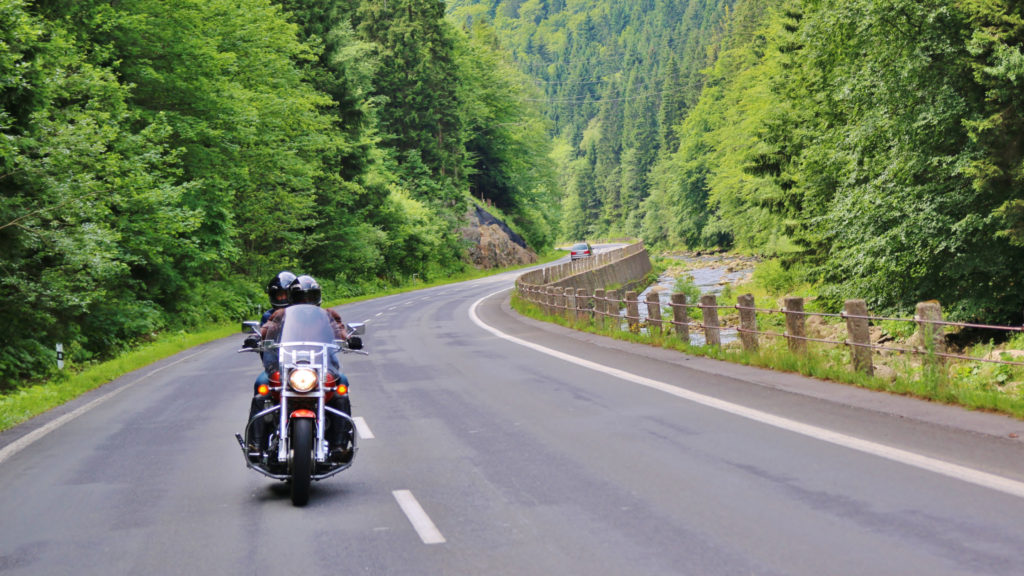
No one who’s ever been on any kind of motorcycle – whether it’s a dirt bike, a Vespa, or a Harley – will disagree that there’s simply nothing else like riding on two wheels. That gut-punch of raw power perched between your legs… the wind blasting past your face (or through your hair if you choose to go helmet-free)… the unmatched feeling of freedom promising you that the road ahead is ready and willing to take you almost anywhere! Nothing can match it!
At the same time, anyone who’s ever been involved in a motorcycle crash can tell you it’s not an event they would wish to repeat. Even a mild case of road rash can be excruciating. Broken bones often take many months to heal or require surgery to be reattached. And traumatic brain injuries (TBIs) can have tragic lifelong impacts. Indeed, a study described by the National Institute of Health noted that nearly 60 percent of motorcycle riders admitted to hospitals following accidents had head injuries; and more than 85 percent of rider deaths involved trauma to the head.
Sadly, though, motorcycle crashes are actually quite common here in the Great Lakes State. There are thousands every year – ranking Michigan in the worst 10 states for motorcycle accidents. Not to mention that our state’s very permissive helmet law, while it has perhaps resulted in fewer actual deaths, has also made Michigan motorcyclists more vulnerable to severe head injuries than they might otherwise have been. But it’s not just careless riders, irresponsible car drivers, or the lack of helmets that contribute to motorcycle accidents and resulting injuries. The bikes themselves are often at the core of the safety problems that make riding so dangerous.
What makes motorcycles so accident prone?
Motorcycles are especially vulnerable to a variety of road hazards due in part to their size, but also because of unique physical elements in their construction and design. While engineers can attempt to mitigate those problems, they haven’t been able to totally remove them from the gestalt of a motorcycle. Here are a few “genetic” problems that contribute to the inherent dangers of scooters and motorcycles:
- Two wheels are inherently less stable than three or four. As anyone who’s ridden a regular bicycle can attest, it’s very difficult to remain in an upright position without some forward movement to help maintain balance. When a bike isn’t moving, the lack of gyroscopic force makes it nearly impossible for it to stay up on its own, or without the rider having to place one or two feet on the ground to add stability. On the other hand, trikes (like the Can-Am Spyder or Polaris Slingshot) and vehicles with four wheels can’t as easily tip over regardless of their speed. Interestingly, even physicists say they can’t completely explain why bicycles remain upright, as this brief but fascinating video demonstrates. It seems that riding a bicycle is somewhat akin to being a magician, just as riding a motorcycle imparts a magical feeling of bliss to many bikers.
- Loose gravel and flawed road surfaces can contribute to motorcycle accidents. All vehicles depend upon friction with the road surface to provide the ability to accelerate, decelerate, and steer, but motorcycles are especially prone to being affected by loss of contact with the road underneath them. When the connection between rubber tires and the solid road surface becomes tenuous or is broken, riders can lose control of their bikes and accidents are a frequent result. The same traction-related issues often arise on bridges or railroad crossings, especially in places where wheels and tires can be grabbed by open joints between paved surfaces, or where metal grating can become slick. Also, road repair projects using slippery steel plates represent a unique threat to motorcyclists, a risk that is exacerbated under wet conditions. Similarly, partially completed road construction projects can introduce problems of their own. For example, if one lane is significantly higher than the next lane when new pavement is being applied, the difference in height can force a motorcycle’s front wheel to turn in an unexpected direction during a lane change, leading to painful spills. Likewise manhole covers and sewer grates sometimes pose issues for unsuspecting riders, who can be toppled to the ground when they encounter major changes in the road’s usually level surface.
- Snow and ice may cause riders to lose control. While winter isn’t the most popular time to ride a motorcycle in Michigan, sometimes there are sunny days that make it just too tempting to ignore the call of the wild. But bikers beware! Treacherous black ice can lead to accidents, and in cases where a rider crashes in a remote area and isn’t visible to other drivers, hypothermia presents an added life-threatening danger. Similarly, fresh asphalt can become a hazard at any time of year, especially when it’s raining. So be particularly cautious before, during and after storms when riding on a newly paved surface.
- Motorcycles are susceptible to wind and blasts of air from passing cars and trucks. As this interesting short video shows, the air immediately before and after a large truck passes a bike is first pushed forward and then sucked back – two phenomena that can dramatically affect a motorcycle’s stability. The burst of wind that is pushed ahead of a truck can upset an unsuspecting motorcyclist, and cause tip-over accidents. Likewise, the strong suction effect that arrives after a larger vehicle passes a bike can result in crashes, too. What’s more, ambient weather conditions such as thunderstorms and gusty winds are particularly dangerous to motorcycles for many of the same reasons as the other hazards we’ve discussed. When a biker is unexpectedly slammed by a wind gust, it can be difficult to recover forward momentum, and riders sometimes overcorrect, leading them to collide with other vehicles or crash into roadside hazards such as trees and power poles. Wind can also push debris into your path, making it necessary to swerve or to apply brakes quickly – each of which can lead to accidents.
- Animals are special hazards for motorcycles. Dogs sometimes like to chase motorcycles, and those interactions can be painful for riders who fall while attempting to avoid hitting someone’s beloved pet poodle. Deer encounters, too, are another ever-growing issue for motor vehicles of all types, but can be especially hazardous for motorcyclists who are fully exposed and unprotected from the animals and their sharp antlers.
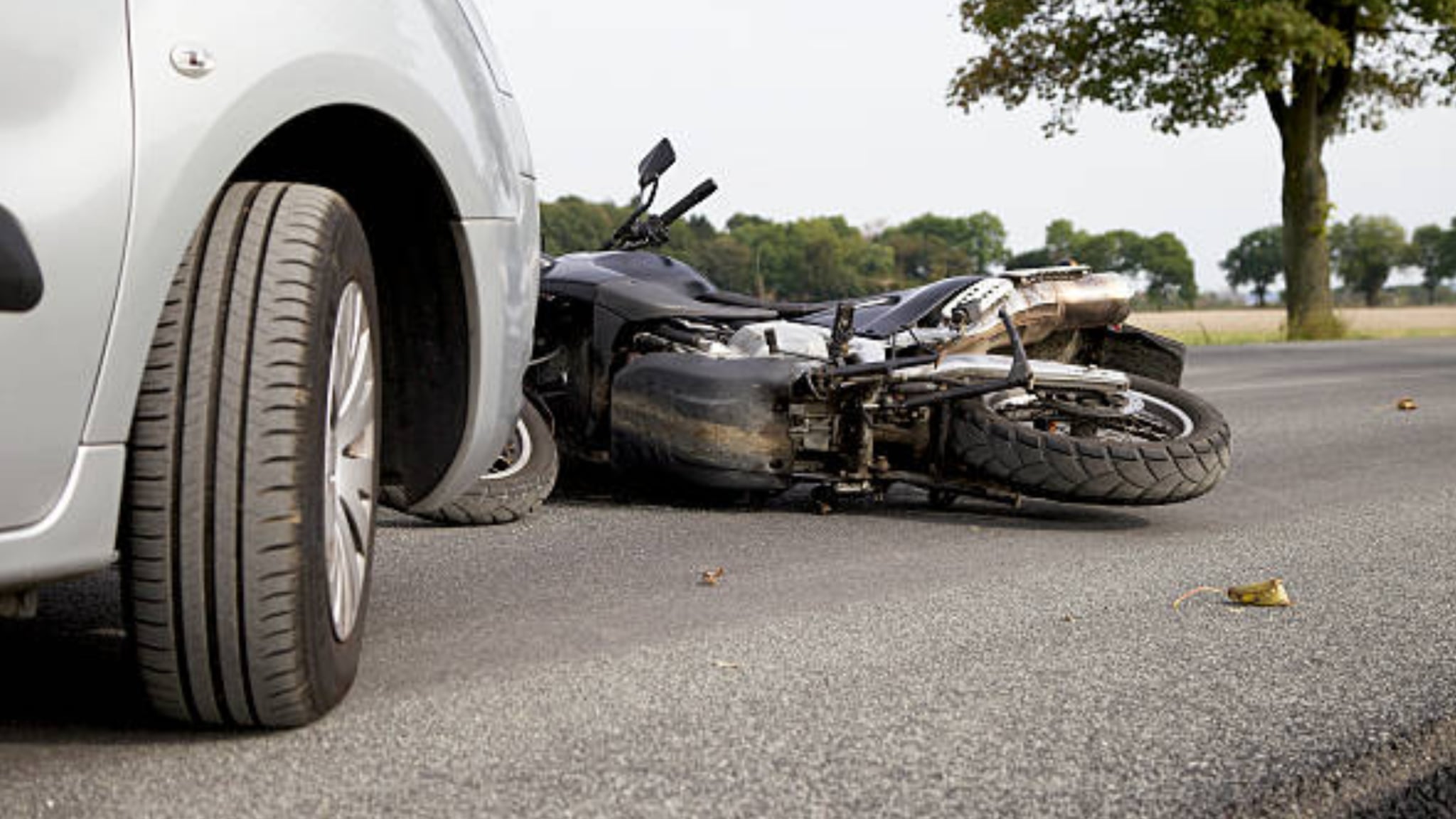
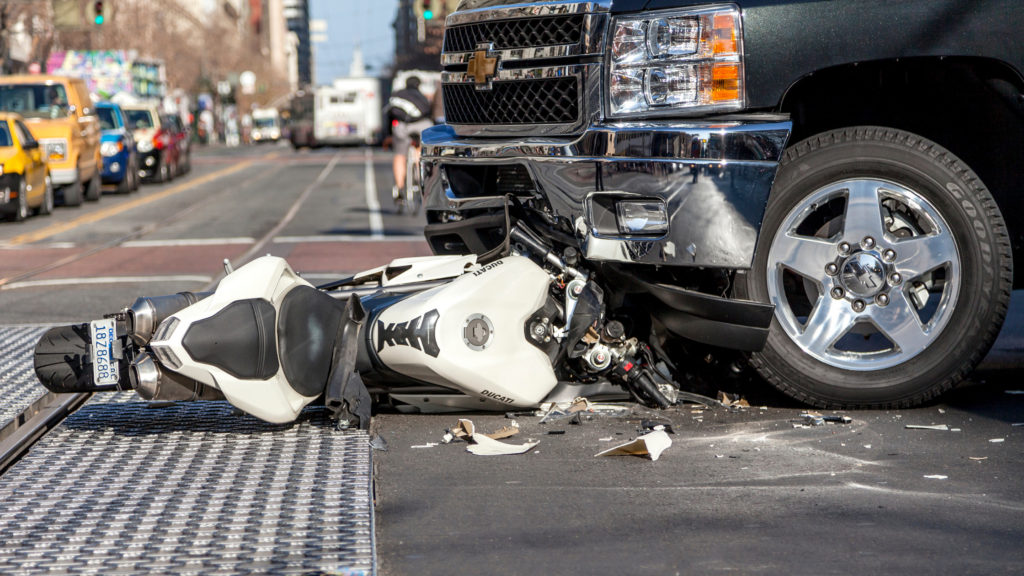
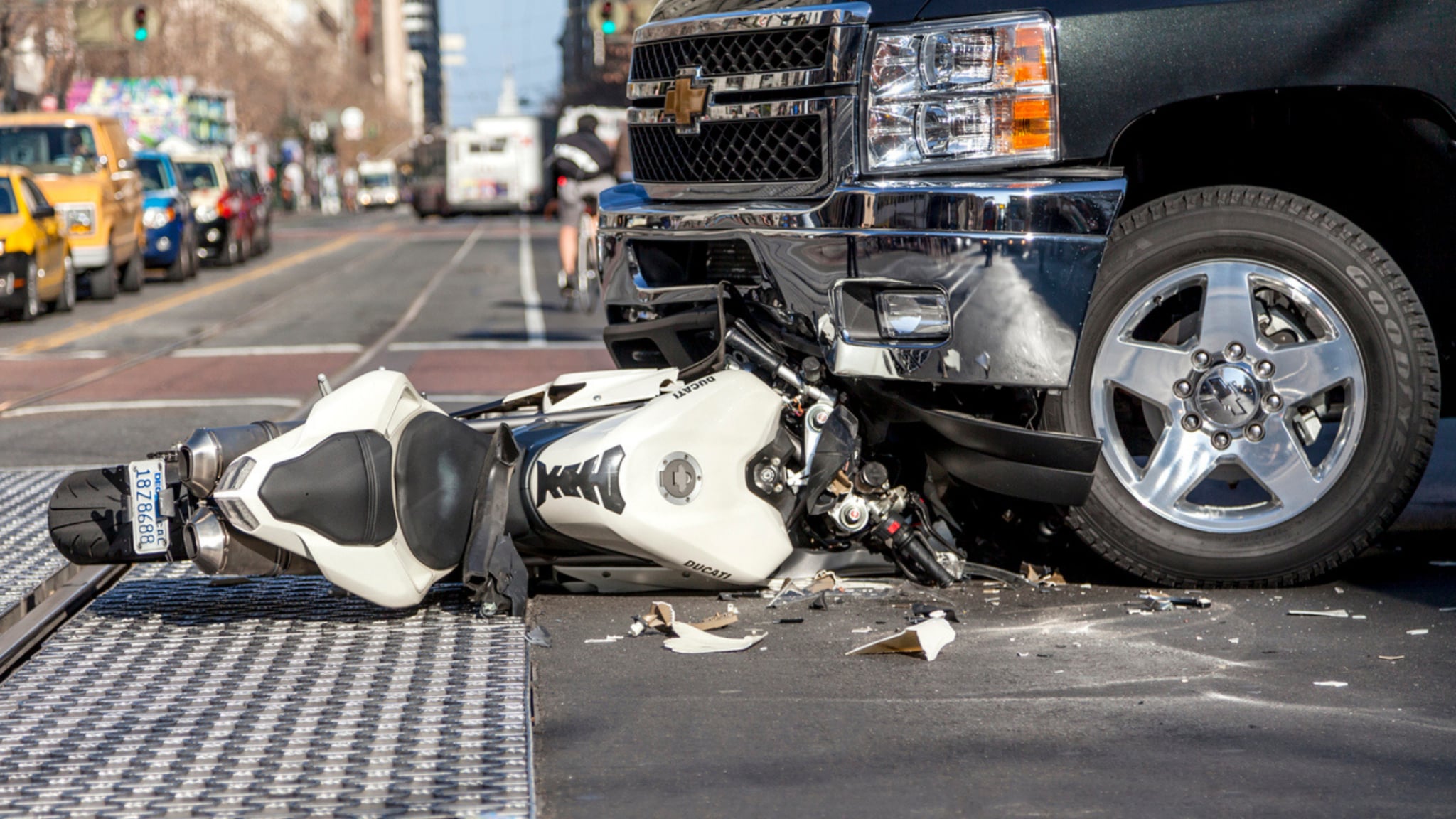
- Let’s face it – motorcycles are small fish in a big pond. Cars, pickup trucks and SUVs typically weigh around two tons. Tractor-trailers, semis, and dump trucks can be 16-20 times heavier than passenger vehicles. In contrast, most motorcycles weigh less than 800 pounds. To put this another way, it’s like the old cliché image of a massive killer whale chasing a shark that’s in turn attempting to catch a codfish: The winner in this classic battle of survival is definitely going to be the orca! To sum up, in a crash with a passenger car, a motorcycle is probably going to lose. And a biker who tangles with a tractor-trailer is almost always going to be out of luck. Size matters.
- Motorcyclists sometimes put themselves in harm’s way. Let’s be painfully honest, motorcyclists are not always the safest people on the road. And such ill-advised (not to mention illegal) practices as lane-splitting, exceeding the posted speed limit, drag racing, drafting (following large vehicles very closely to save on fuel), and careless or irresponsible driving are all contributing factors that help make motorcycles a more dangerous form of transportation than passenger cars. Yes, you can be safe on a bike, but only if you treat it with the care and respect it deserves. Here is some advice on how to make that happen.
If you own a motorcycle, we are here to protect your rights
Despite the varied risks, safety issues, and physical limitations of motorcycles we’ve just discussed, we firmly believe that riders should have the same privilege as anyone else to travel safely and enjoy the picturesque roads that crisscross the great state of Michigan. If you’re a motorcycle owner, we’re here to help protect your rights, and to safeguard you from the high cost of injuries that are not your fault. If you’re ever hurt in a motorcycle accident caused by the irresponsible actions of another driver, give us a call at 855-MIKE-WINS (855-645-3946) and we’ll do our level best to help you receive the compensation you deserve.
Content checked by Mike Morse, personal injury attorney with Mike Morse Injury Law Firm. Mike Morse is the founder of Mike Morse Law Firm, the largest personal injury law firm in Michigan. Since being founded in 1995, Mike Morse Law Firm has grown to over 250 employees, served 100,000 clients, and collected more than $2 billion for victims of auto, truck and motorcycle accidents. The main office is in Southfield, MI but you can also find us in Detroit, Sterling Heights and many other locations.